







If there’s one recipe that shows how simple ingredients can turn into something special, it’s gnocchi. Made from just potatoes, flour, and eggs, these soft, pillowy dumplings come together through technique—how you mash, mix, and shape the dough matters just as much as what goes into it.
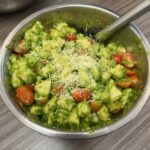
In our version, we pair the homemade gnocchi with a fresh basil pesto and cherry tomatoes, building flavor at every step. This is a great recipe to practice with kids, combining key skills like knife work, dough handling, and timing at the stove. It’s a hands-on recipe that rewards patience and attention, and one that helps students understand how texture, heat, and balance come together on the plate.
Whether you’re making it for the first time or returning to it, gnocchi is a reminder that cooking is as much about feel as it is about following a recipe. Let us know if you try this at home + tag us @sylviacenter!
Serves: 6–8
Prep Time: 45 mins
Notes: can be made gluten-free if using GF flour
Pesto
2 bunches basil, leaves picked
¼ C sunflower seeds
2 cloves garlic, peeled
2 oz Parmesan, shredded (final yield approx. ½ C), plus more for serving
½ C olive oil
Gnocchi
2 lb Russet potatoes
2 eggs
1 C all-purpose flour, plus extra for flouring
1 tsp kosher salt
To Serve
1 pt cherry tomatoes, halved
Recipe Method
- Start by making the sauce. To a food processor, add the basil, sunflower seeds, garlic, Parmesan, and olive oil, and pulse until smooth. Season to taste with salt and pepper and set aside.
- Peel the skins off the baked potatoes and place the insides in a large bowl. Mash the cooked baked potato until soft and fluffy, with no chunks visible. Make a well in the middle of the mashed potato and add the eggs. Using a fork, mix the eggs until scrambled, then gradually mix the egg into the rest of the potato until fully combined and smooth. Be careful not to overmix to keep gnocchi light and fluffy, not gummy and tough.
- Add the flour and salt to the bowl, and fold in, being careful not to overmix. Lightly flour your work surface. Once a shaggy dough forms (rough, uneven, lumpy), turn the dough out onto the floured surface.
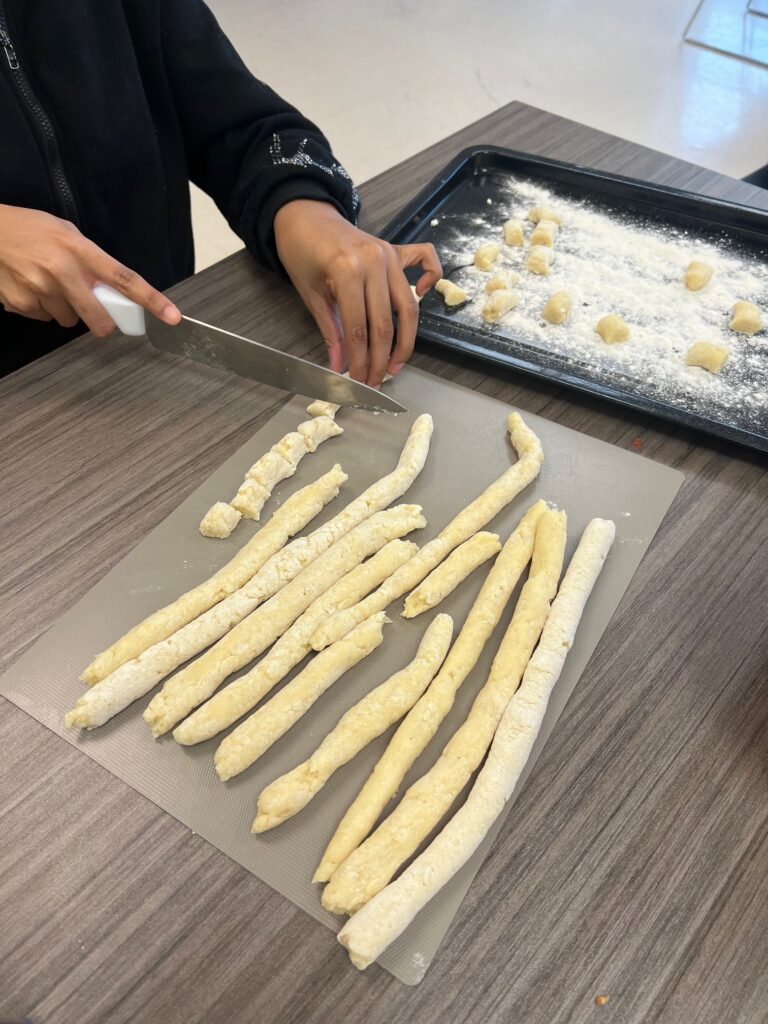
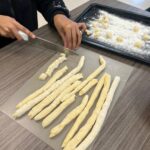
- Using your hands, carefully squeeze the dough together to form a ball. The goal is not to knead and work the gluten but rather bring the dough together evenly. Using your hands, divide the dough into small handfuls. Gently roll each section into a long rope, about the width of a nickel.
- Using your hands, divide the dough into small handfuls. Gently roll each section into a long rope, about the width of a nickel.
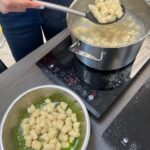
- Bring a large pot of salted water to a boil (your water should taste salty like the sea). Reduce to a simmer until ready to use.
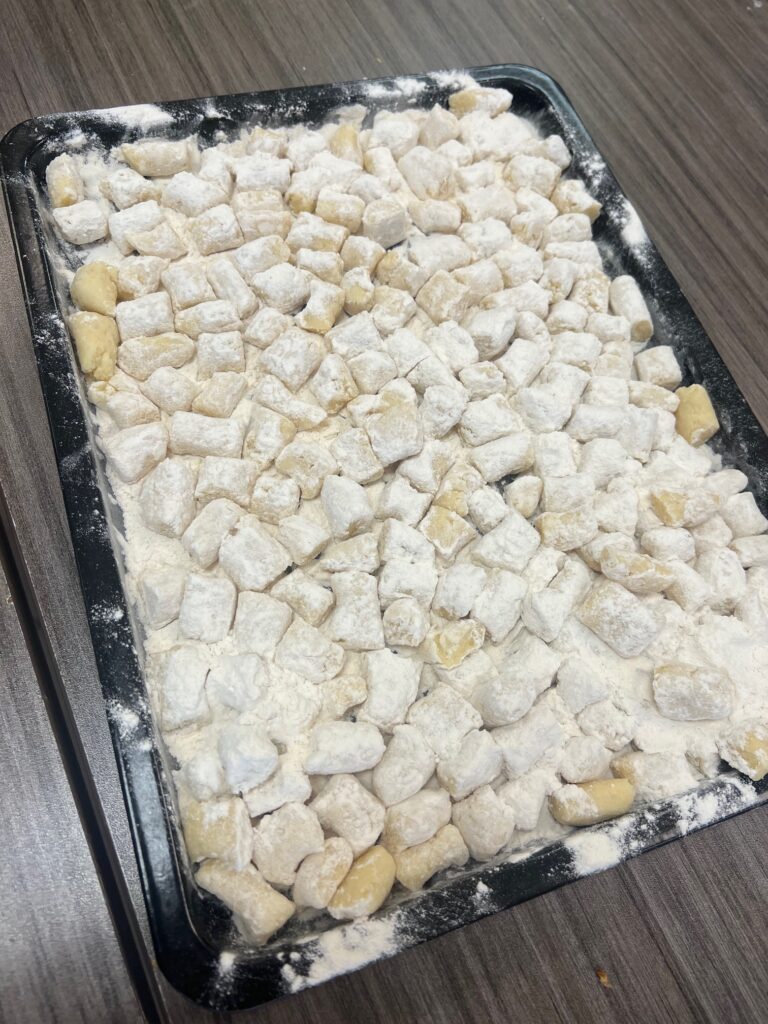
- Cut the rope into ½-inch pieces, and gently roll each piece along the prongs on the back of a fork to make ridges. Dust with flour again and set aside on a sheet tray. Repeat with the remaining dough until all gnocchi has been formed.
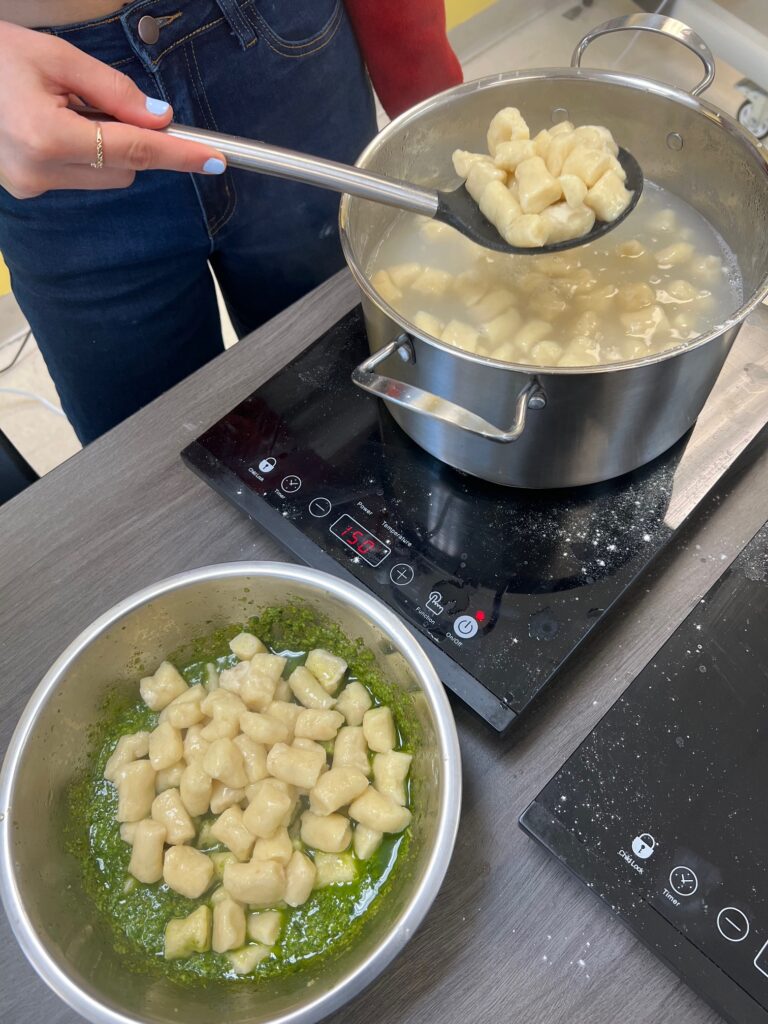
- Add half the gnocchi to your pot of gently boiling water, and cook for around 3 mins. Once they’re cooked, they will rise to the surface of the water. Using a slotted spoon, transfer the cooked gnocchi to a bowl and repeat with the remaining gnocchi. Once all the gnocchi are cooked, briefly return them to the boiling water for 5 secs to reheat, then strain and add back to the bowl. Immediately top with the pesto. Carefully fold the cherry tomatoes into the sauce and mix just until everything is evenly coated. Serve with additional Parmesan.
| Recipe Ingredients | Substitutions |
| Russet potatoes | Idahos, or any starchy baking potato |
| All-purpose flour | Gluten-free 1:1 flour blend, 1 ¼ C (may need 1 ½ C, but add gradually) |
| Recipe Notes |
| It might be tempting to use boiled potatoes instead of baking them but the texture of the gnocchi will be dense and gummy as opposed to the light fluffy pillows they should be. Gnocchi comes from the Italian word for knuckles and has been around since Roman times. They were historically made with semolina flour but in modern times are normally made with potato or ricotta in a variation called gnudi.
To bake potatoes, preheat the oven to 400°. Using a fork, pierce the potatoes 10–15 times. Place the potatoes directly onto the baking rack, and cook until tender, around 1 hour. Test for doneness using a sharp knife: carefully pierce the skin with the tip of the knife, and push the blade into the center of the potato. It should slide in easily when the potato is cooked. If there’s any resistance, return the potato to the oven and cook for another 10 mins before checking again. This recipe can be made gluten-free by using a gluten-free 1:1 flour blend. Gluten-free flours, however, are typically higher in starch and have no gluten-network, so they tend to soak up more liquid than regular flours, resulting in a wetter dough. If subbing AP flour for gluten-free, try to find Bob’s Red Mill, and start the recipe with 1 ¼ C flour. If the dough is still wet, keep adding 1–2 Tbsp at a time until you reach 1 ½ C. |