
Photo: Ivy Hedberg
Since the beginning, the heart of The Sylvia Center’s work has been teaching people the benefits of cooking at home, how to enjoy vegetables, and how to feel confident preparing real food they actually want to eat. As Education Programs Director at The Sylvia Center—and as a registered dietitian and person with public health training—that perspective shapes how I think about food every day.
With the inverted food pyramid introduced by the USDA this month, nutrition and food choices have received a lot of attention lately. While details change year-to-year, the big ideas tend to stay consistent: eat a variety of foods, cook more often, and make fruits and vegetables a regular part of meals. Those principles aren’t new—and they’re exactly what we’ve been practicing in The Sylvia Center programs for more than 18 years.
The Benefits of Cooking at Home
What I’ve seen in my work in public health, and what scientific research supports, is that cooking at home—and giving people space to explore fruits and vegetables through tasting—makes a real difference. When people cook more often, they tend to eat better—they pay attention to what they like and what makes them feel good. Cooking gives people more control over ingredients, helps them rely less on ultra-processed foods, and makes it easier to build meals around vegetables, whole grains, and plant-based proteins. Over a lifetime, that can really add up. As one of our Chef Educators, Des, says, “Starting healthy habits young matters. I see it all the time: the youngest kids in our programs eat vegetables their parents swear they won’t touch at home. It’s all about how you frame it—it’s an adventure!”
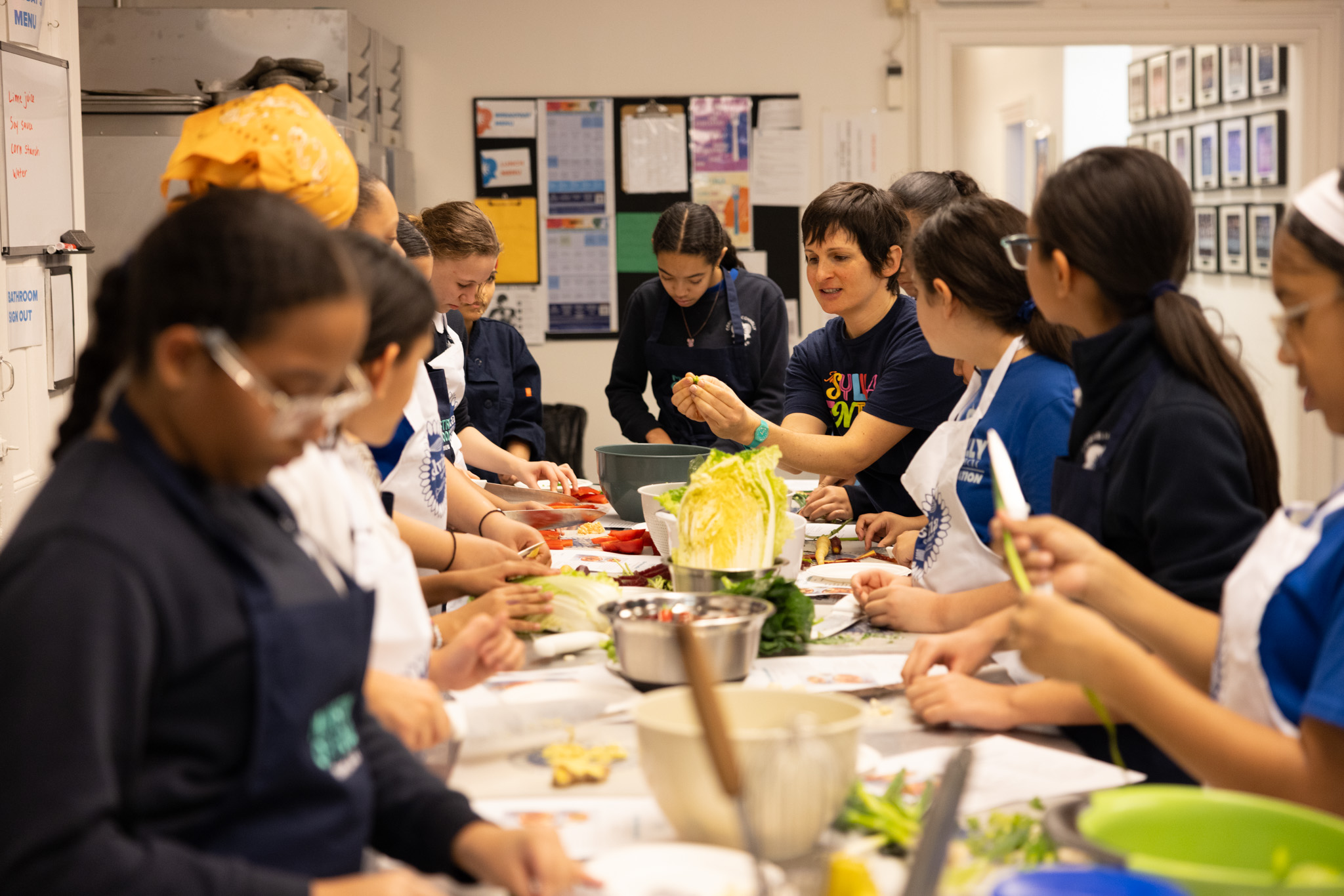
In our classrooms, students cook vegetable-forward dishes they can actually replicate at home—recipes like Callalloo, Kung Pao Cauliflower, or Charred Cabbage with Raita, which highlight whole ingredients. We also use hands-on activities to help students explore how foods change along the processing spectrum. In our “tasting ladder” exercise, students might start with fresh corn, then taste masa, popcorn, and finally corn chips—using curiosity and comparison to talk about flavor, texture, and how foods change as they’re processed. They learn that processing can change food in ways that preserve or even enhance nutrition, and other times in ways that reduce the nutritional value or add preservatives; we don’t label foods as “good” or “bad.”
Taking Care of Ourselves
As program alum—and now TSC Chef Assistant—Khady puts it: “Being part of The Sylvia Center has totally changed the way I eat and think about food. Instead of going to the store for junk food, I go home and make a proper, healthy meal from scratch. They don’t just teach you to cook. They teach you how to take care of yourself.”
That’s why our curriculum has always focused on variety and balance rather than restriction or rules. From our youngest students to family cooking classes, we introduce participants to a wide range of fruits and vegetables, whole grains, and plant-based proteins. We limit added sugar and sodium where we can, and we prioritize whole ingredients over ultra-processed ones because these choices support long-term well-being and help students build habits that stick.
Nutrition advice will always evolve, and conversations about food will continue to shift. But The Sylvia Center’s approach remains steady. We believe that cooking skills, joyful exposure to seasonal vegetables, and culturally responsive recipes are some of the most effective tools we have to support life-long health. As we move into the new year, that commitment hasn’t changed—and it’s work we’re proud to keep doing.
 Beth joined The Sylvia Center as Education Programs Director in 2024, and is a passionate food educator whose mission is to bring farm-fresh produce into people’s hearts and homes. Learn more about her here!