








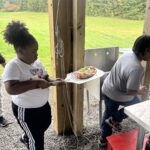






A pepper picked straight from the plant. A handful of fresh dill. A husk cherry, tasted for the first time.
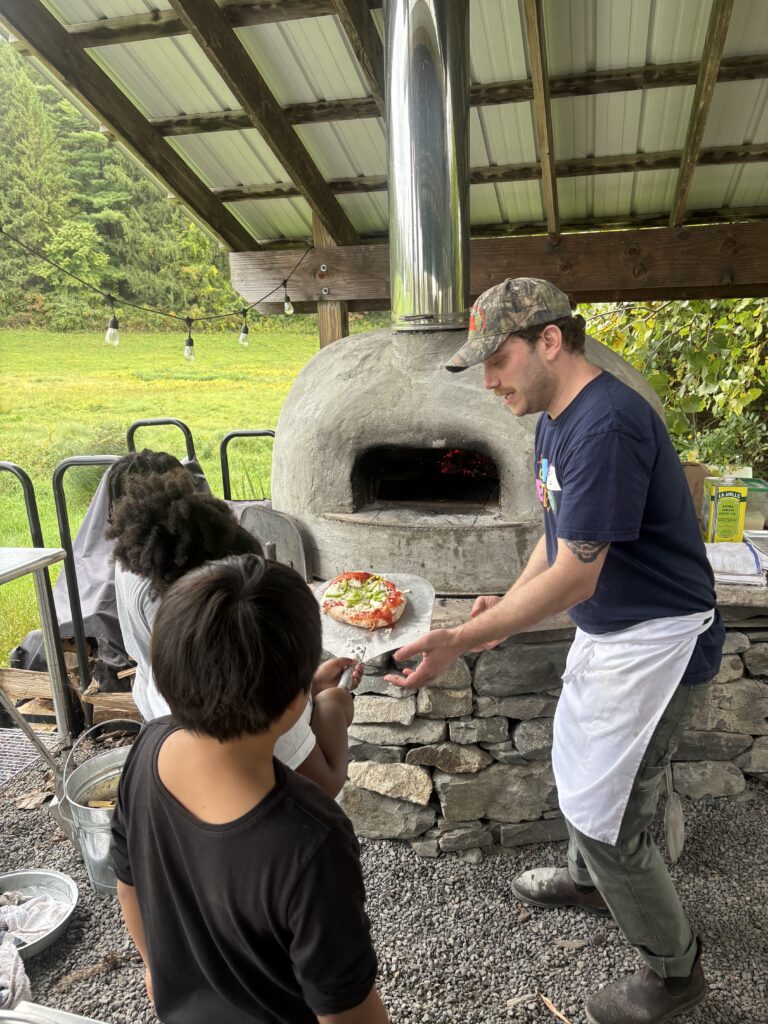
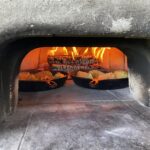
At The Sylvia Center’s Learning Garden at Katchkie Farm, these discoveries can become lunch in a matter of minutes, thanks to one of our most versatile teaching tools: a wood-fired pizza oven.
The oven brings together so much of what we teach about food. Agriculture, seasonality, nutrition, cooking skills, and even physics converge around a simple, familiar meal. And because students can follow an ingredient from the soil to their plate in a single visit, the connections become immediate and tangible.
A Living Classroom
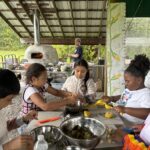
Throughout the growing season, our Learning Garden Manager Julie and Garden Intern Nate cultivate a remarkable variety of vegetables, herbs, and edible flowers. Some crops begin as seeds planted by students in spring, only to be harvested by another visiting group months later. It’s a reminder that food doesn’t begin in a grocery store, and that growing it requires time, care, and a little patience.
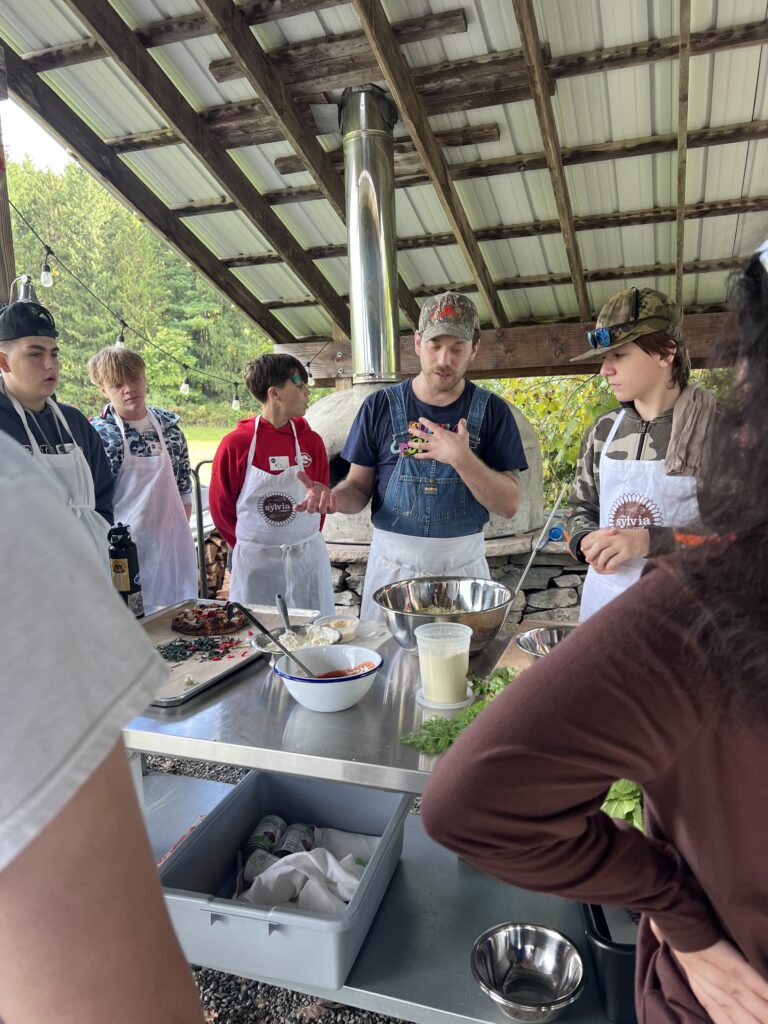
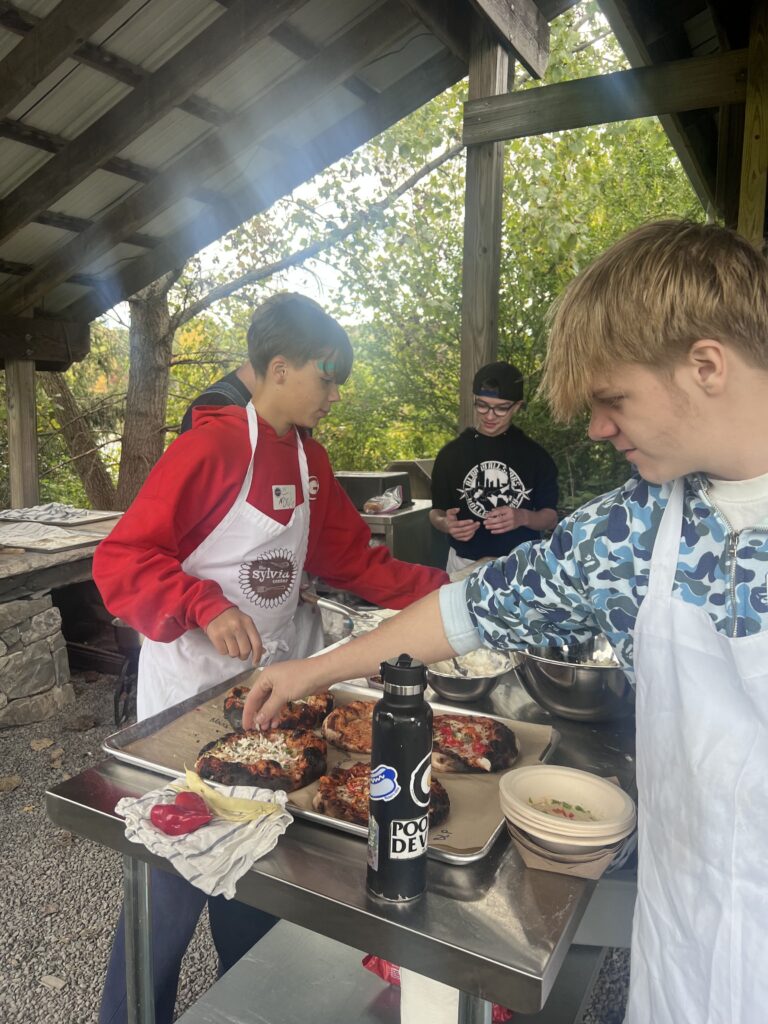
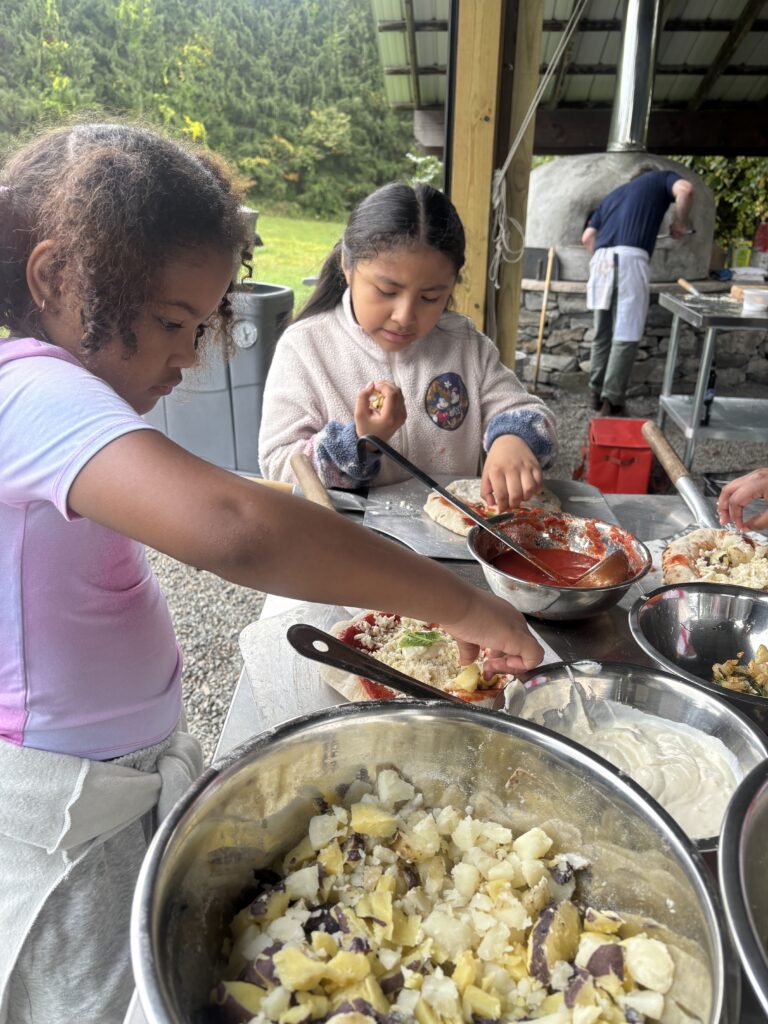
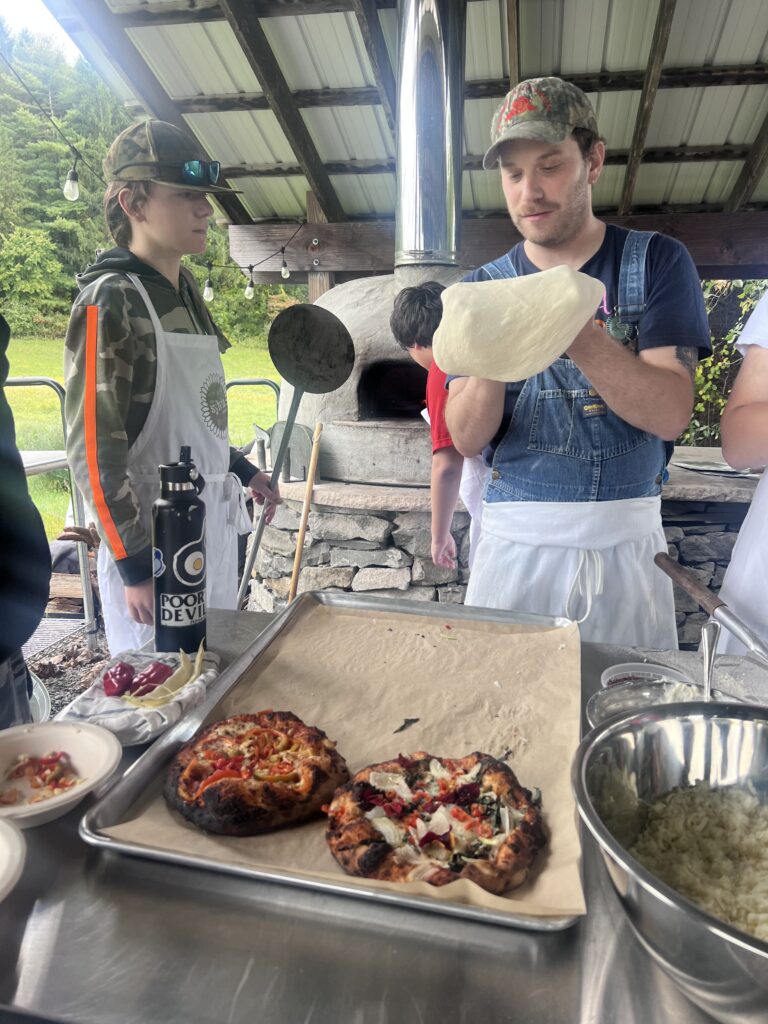
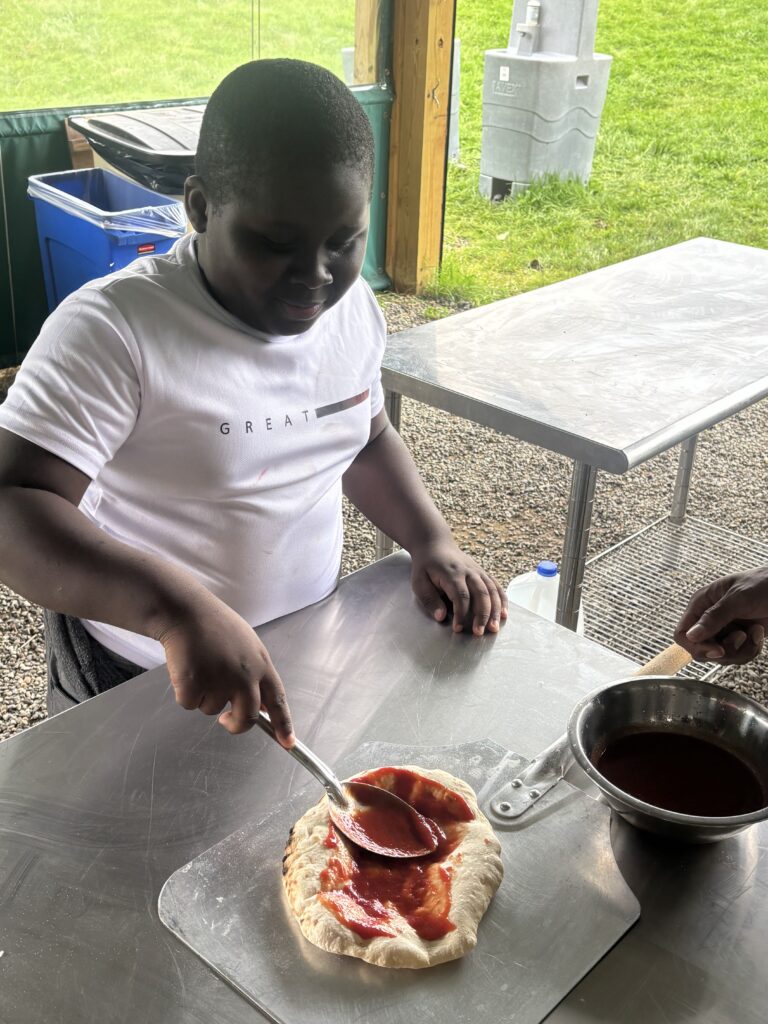
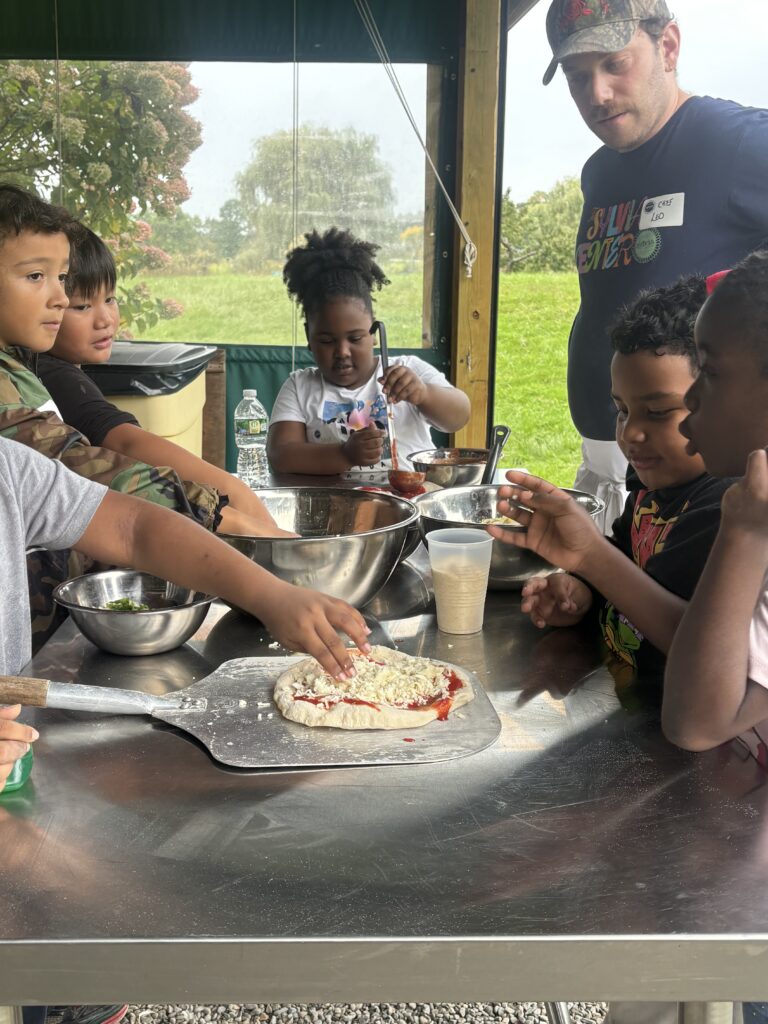
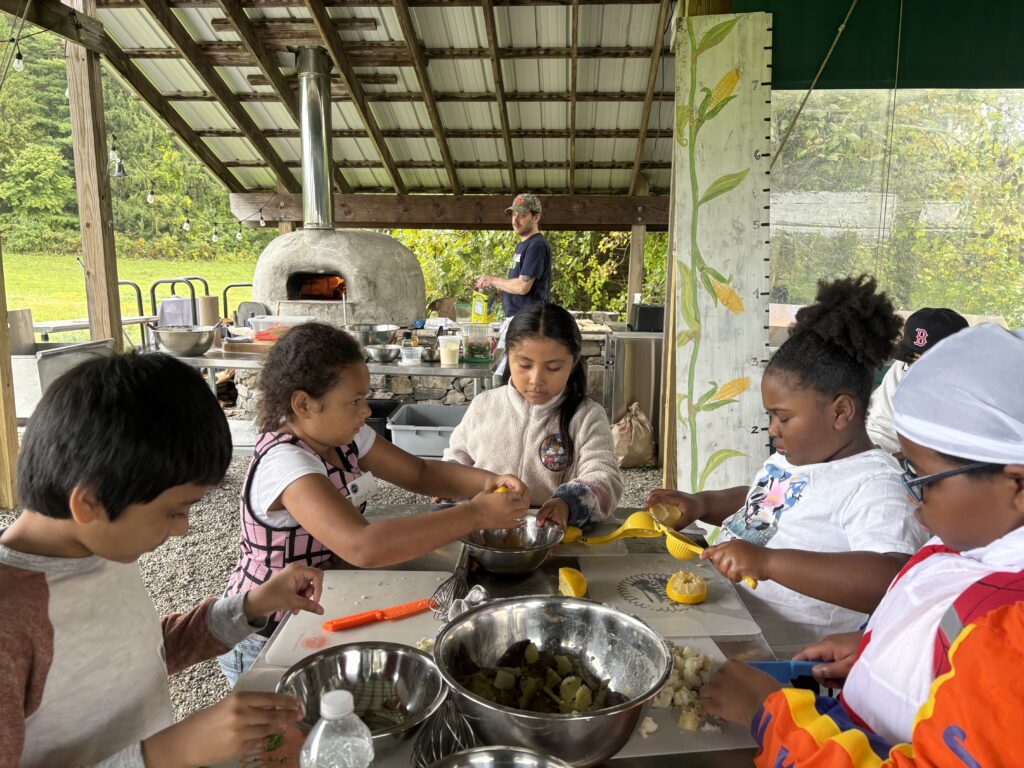
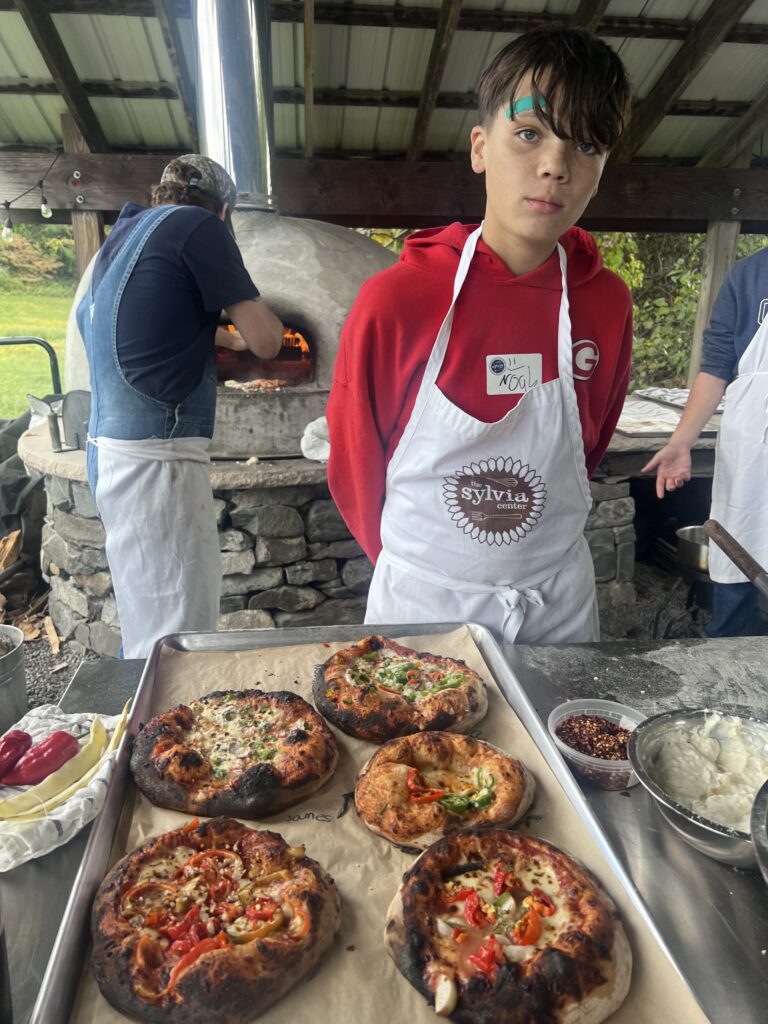
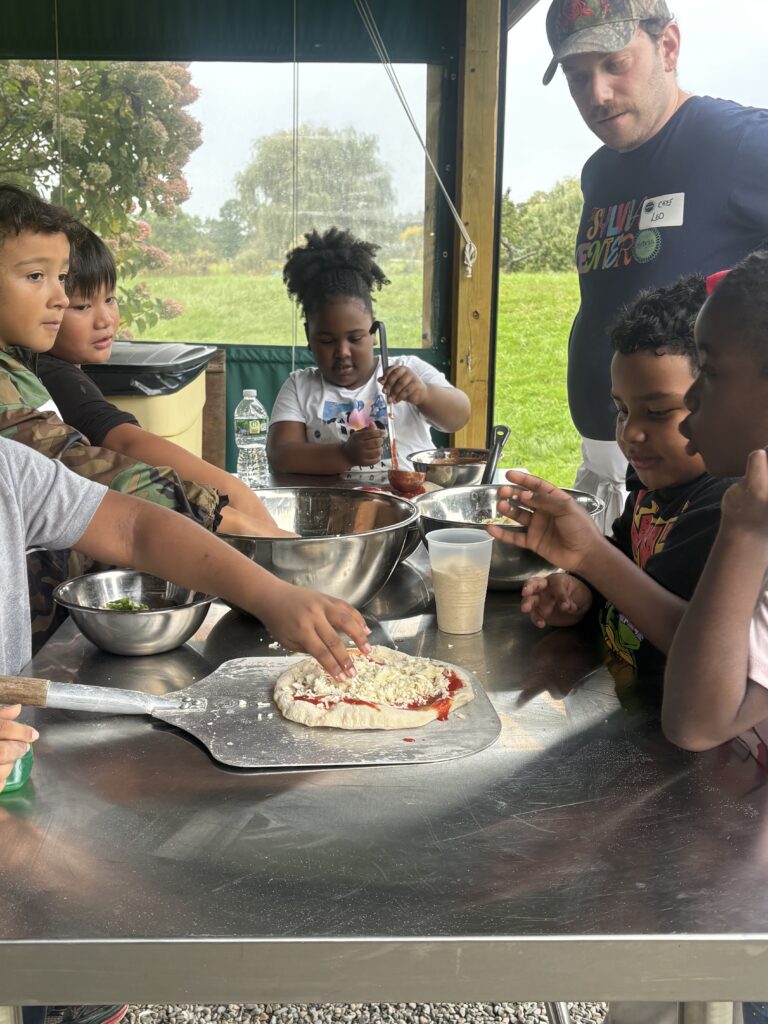
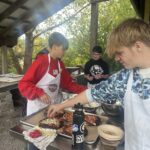
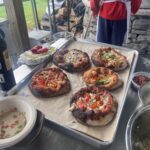
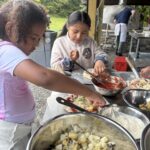
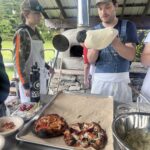
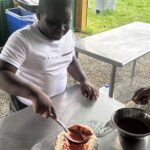
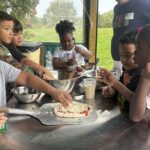
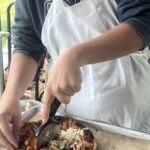
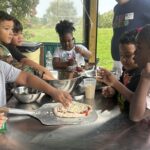
The pizza oven offers an immediate counterpoint to that slow process. Dough prepared by our culinary educators the evening before becomes something students can stretch and shape themselves. Seasonal ingredients from the garden become toppings, often in combinations they might never have considered at home.
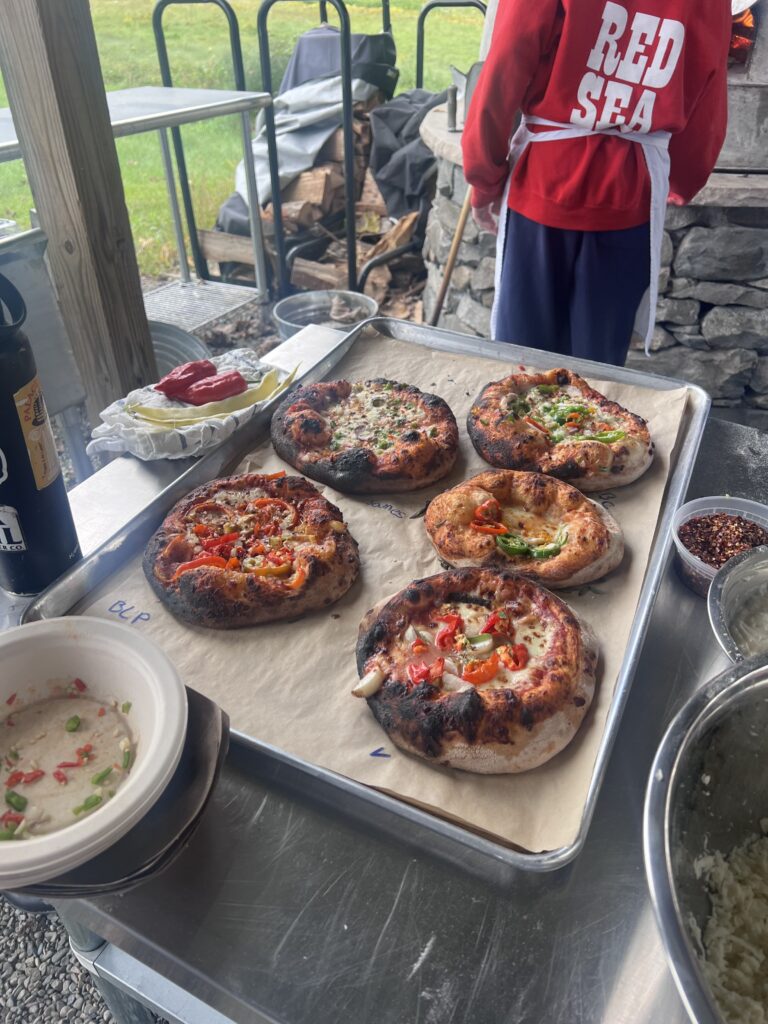
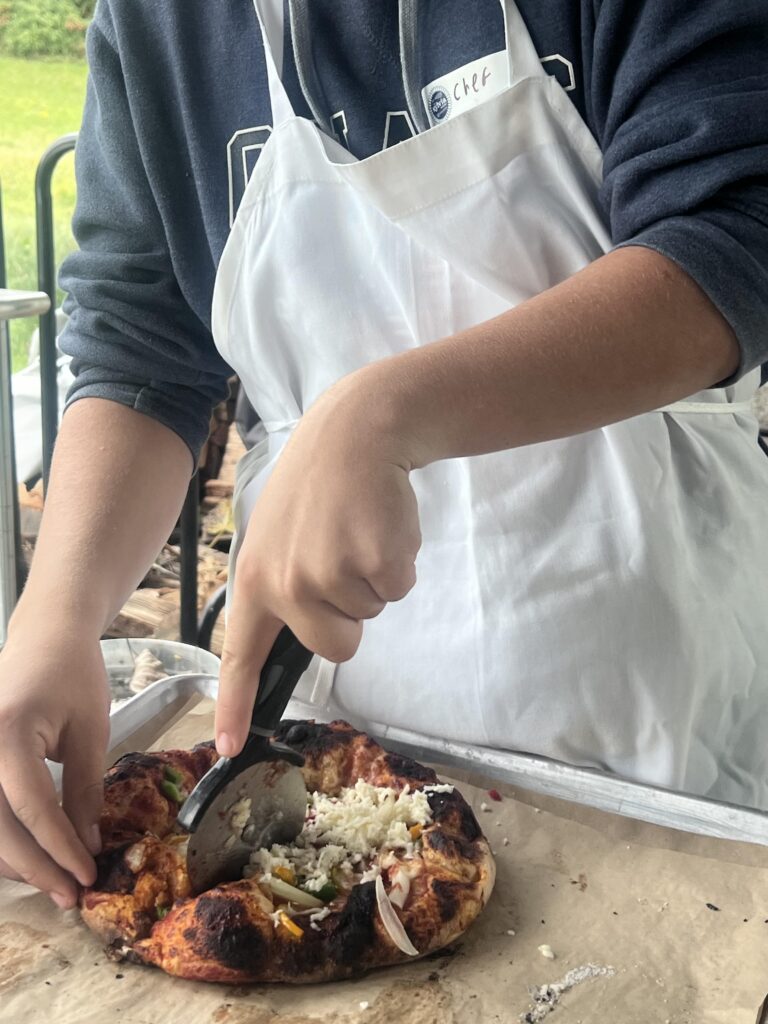
During recent visits from Perfect Ten in Hudson, and Roots Academy and La Salle School in Albany, the last of summer’s peppers featured alongside cucamelons, dill, edible flowers, and even husk cherries. Familiar foods became opportunities for experimentation, while unfamiliar ones found a place on something almost every student recognizes: pizza.
The Science of Cooking with Fire
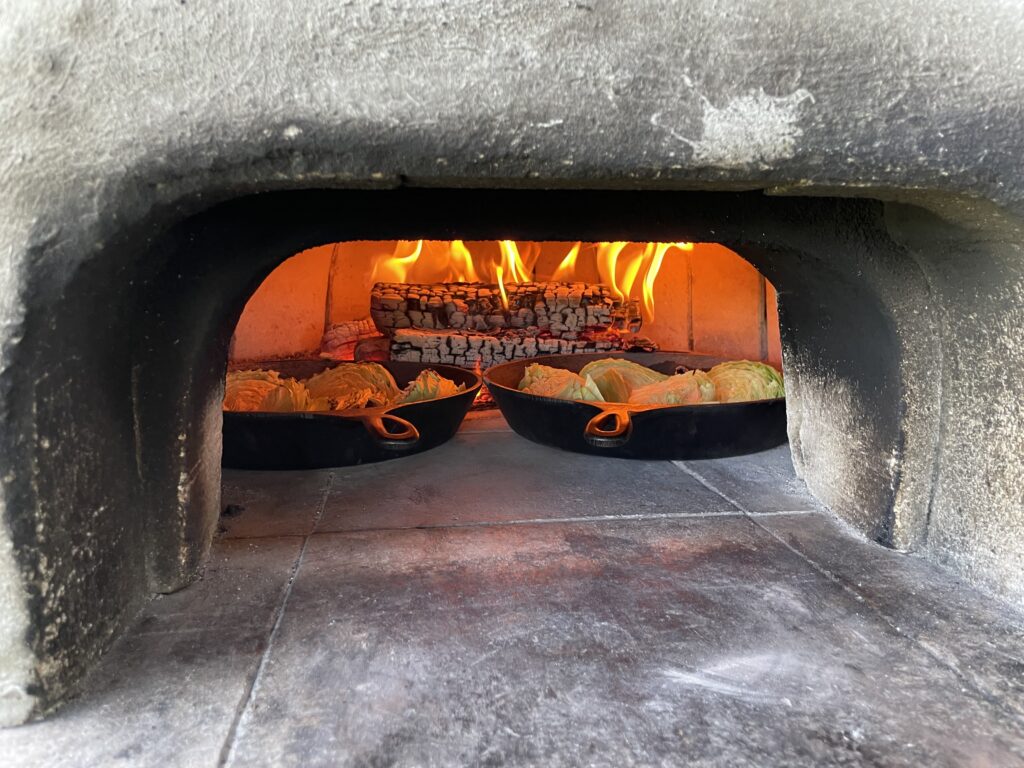
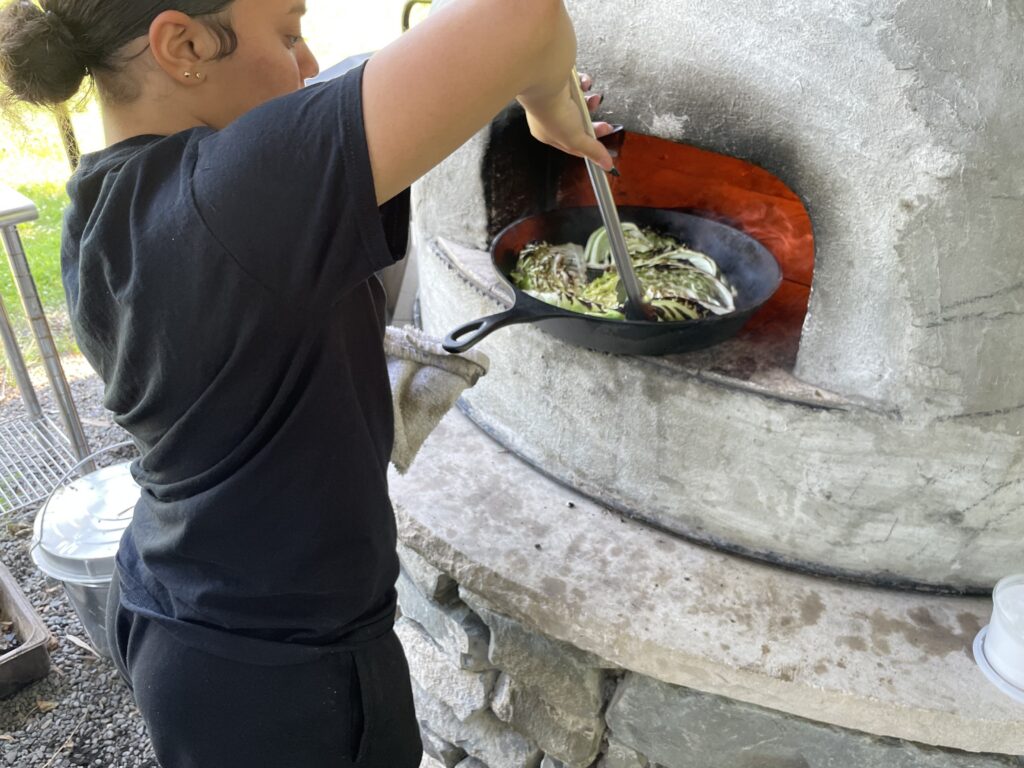
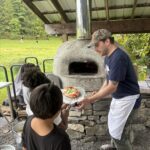
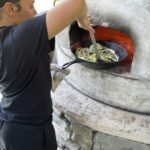
Then there’s the oven itself. Unlike a conventional kitchen oven, a wood-fired oven cooks using intense heat from the fire, the hot oven floor, and the surrounding masonry. Students can explore how heat moves through different materials, why pizza cooks so quickly, and how high temperatures transform the flavor and texture of food.
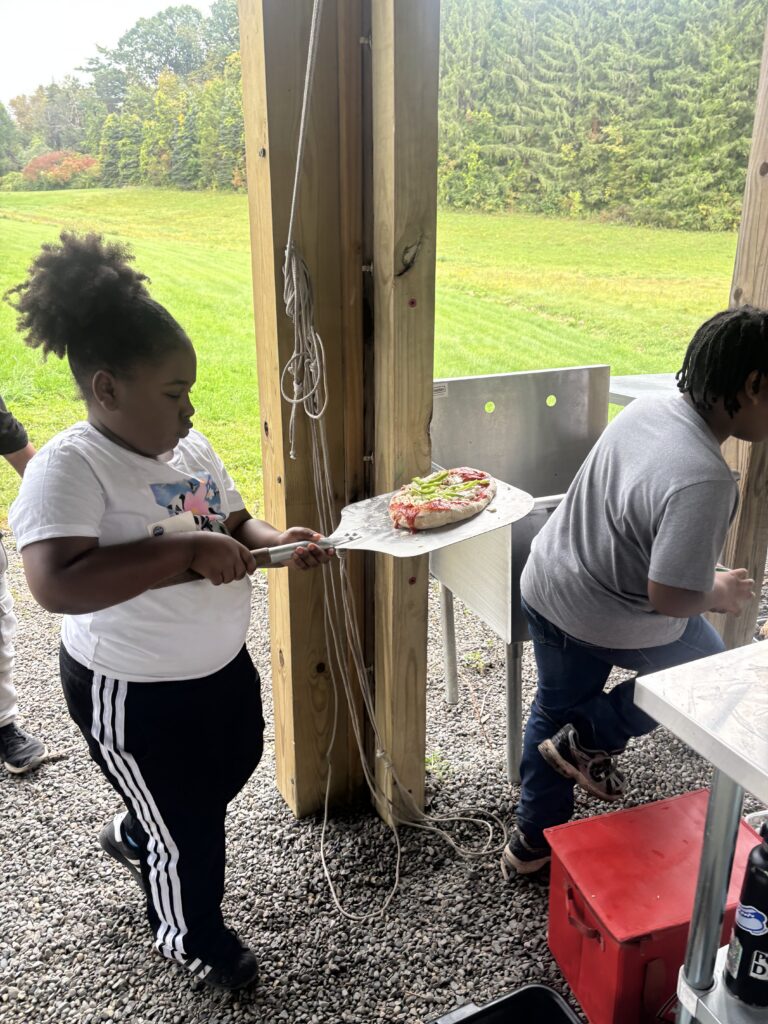
They also get to see—and, with careful supervision, help operate—the tools used to manage that process, including the long-handled pizza paddles that move pizzas in and out of the oven.
For younger children, these experiences might introduce basic ideas about heat, cooking, and how ingredients change. Older students can explore the science in greater depth, from heat transfer and temperature to the effects of different cooking methods on flavor and texture. The same oven becomes a different classroom depending on who’s gathered around it.
From Curiosity to Confidence
Perhaps the greatest value of the pizza oven is the freedom it gives students to experiment.
Unfamiliar vegetables can feel intimidating on their own. As a pizza topping, they become an invitation to be brave: What would happen if we tried this? How might it taste cooked? What could we combine it with?
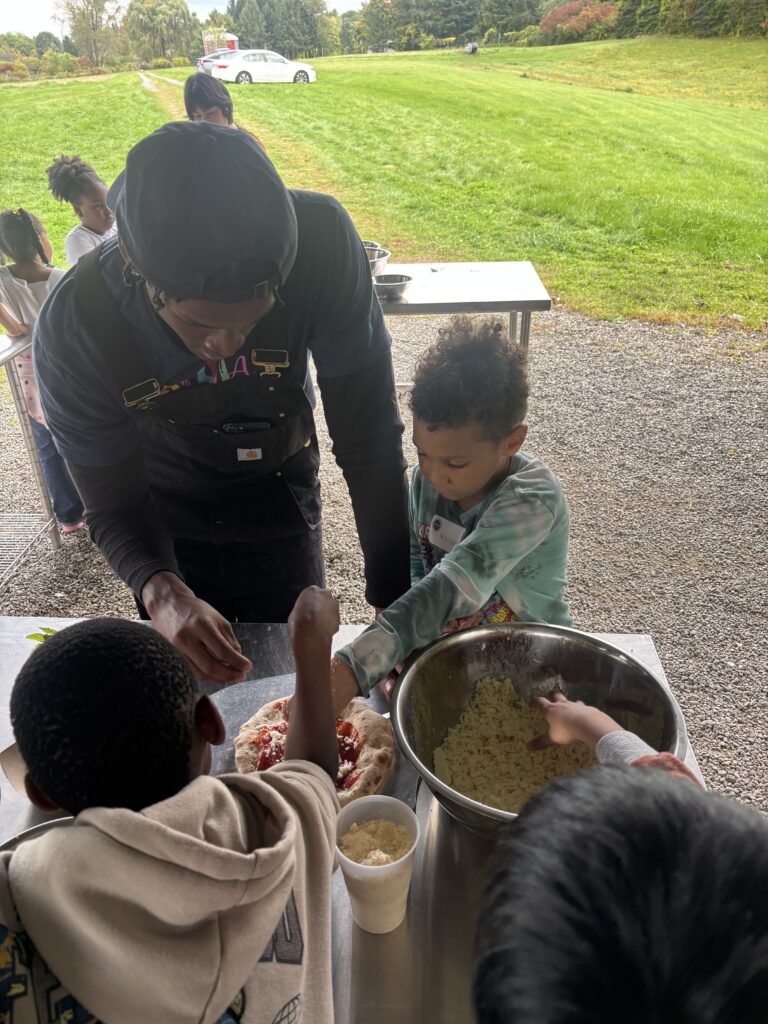
Students can explore those questions through their own choices, using ingredients harvested just steps away. Some groups even make fresh ricotta, adding another layer of food science and hands-on culinary learning. And while a crop might take months to grow, the final transformation happens in minutes. Students can see, smell, and taste the results of their decisions almost immediately.
It’s this combination of curiosity, experimentation, and practical experience that makes the Learning Garden such a powerful educational space. The pizza oven doesn’t simply turn ingredients into a meal. It helps young people connect the food they grow with the food they cook, understand how both are transformed, and discover what they’re capable of creating.