
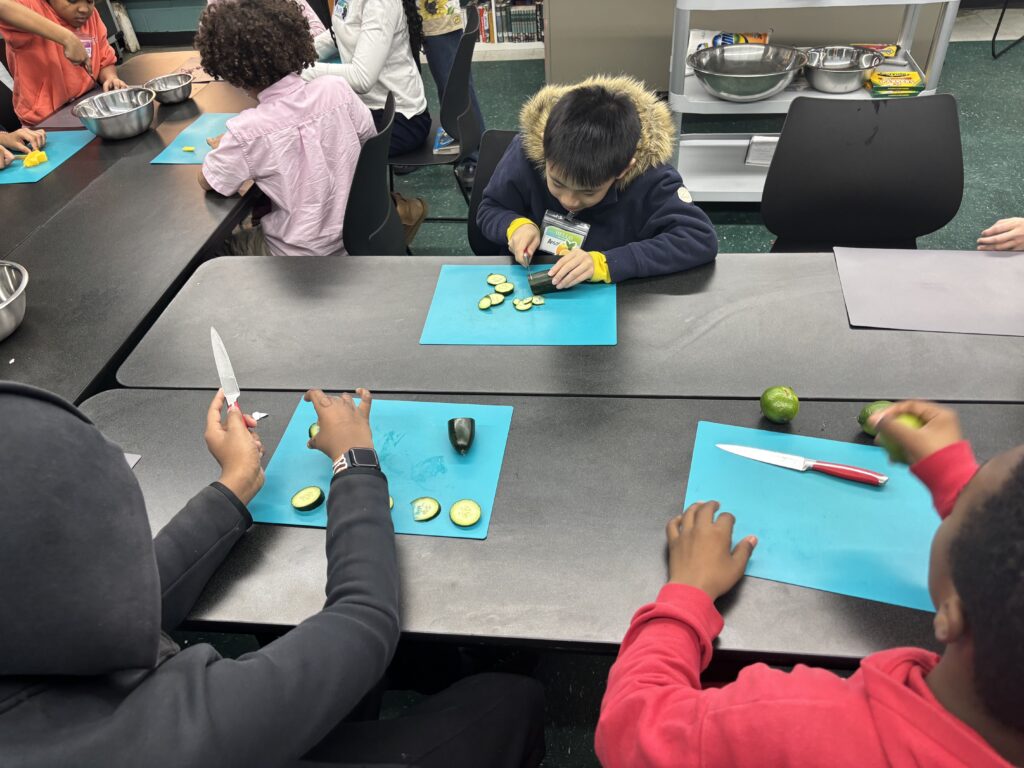
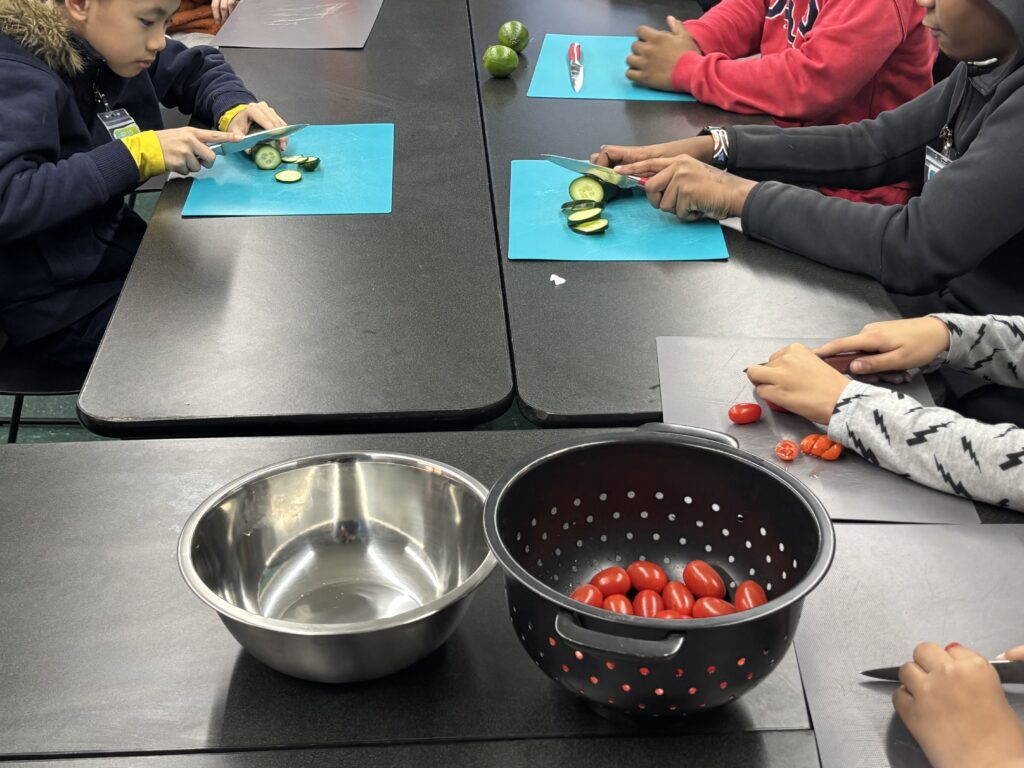
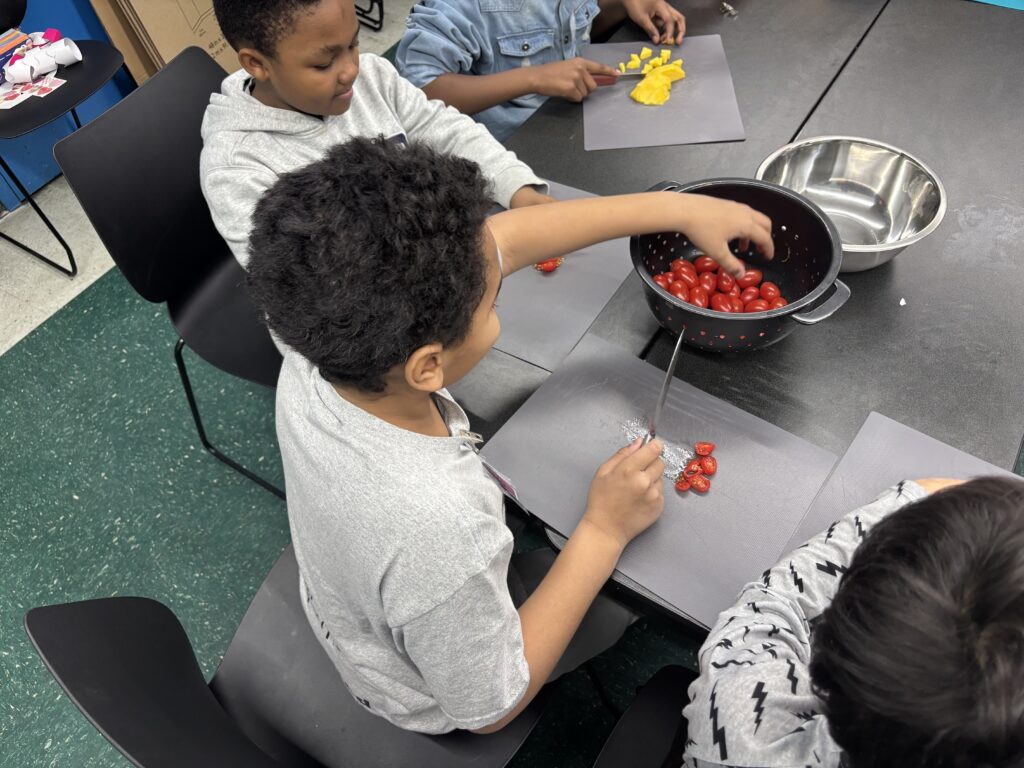
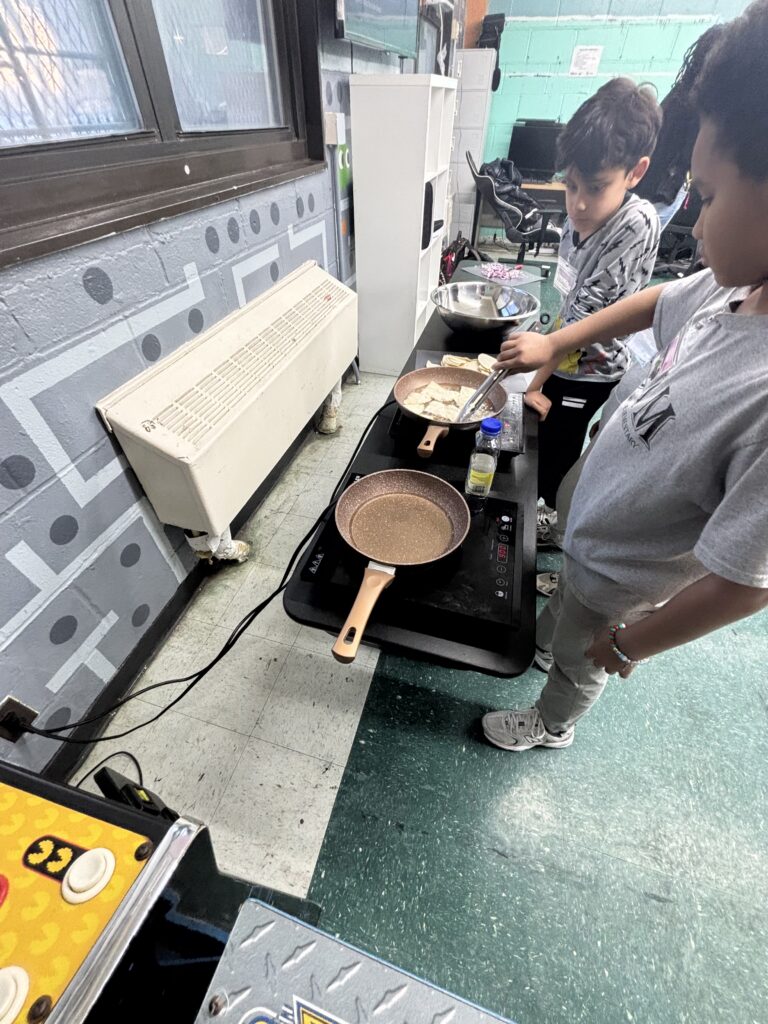
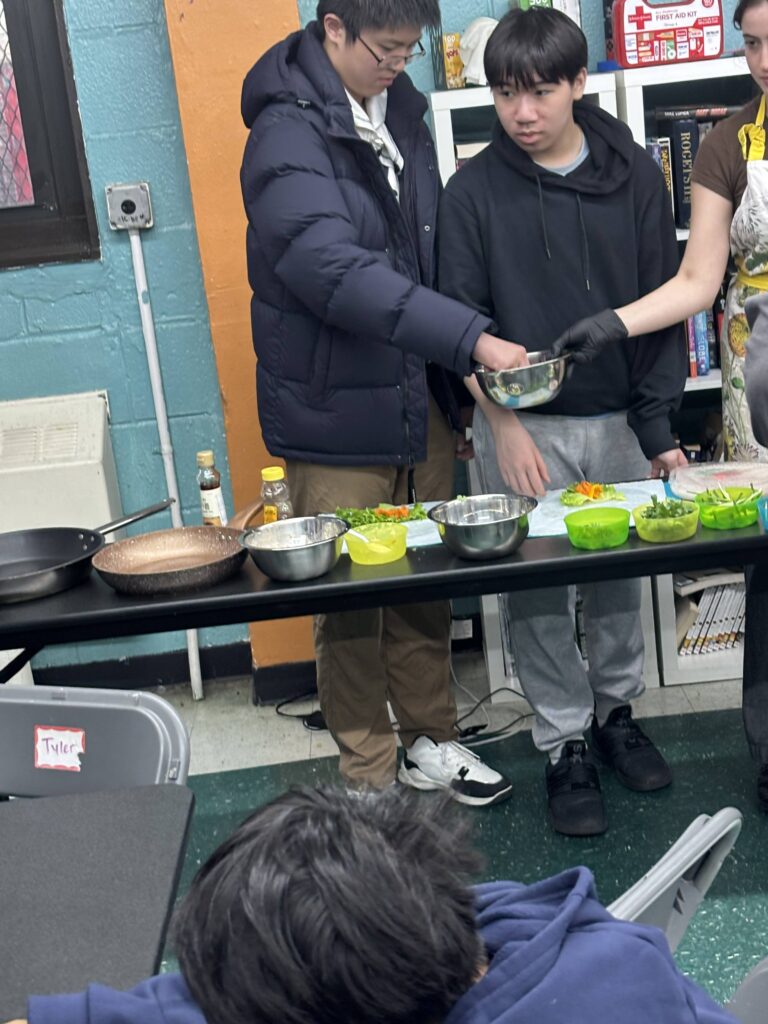
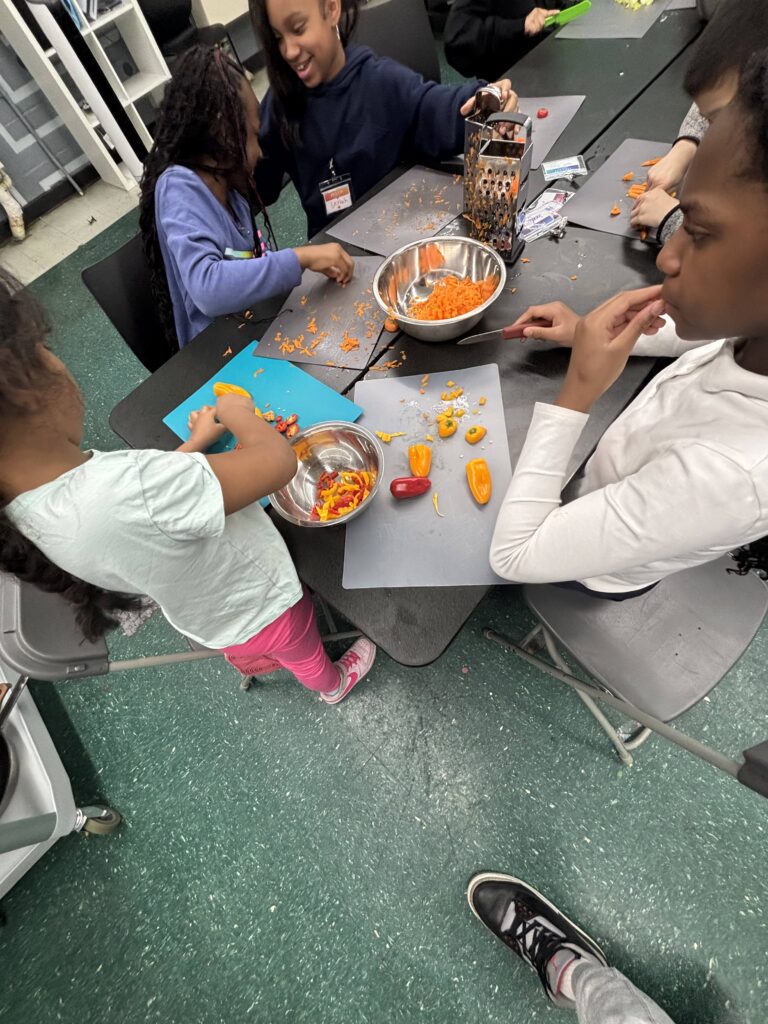
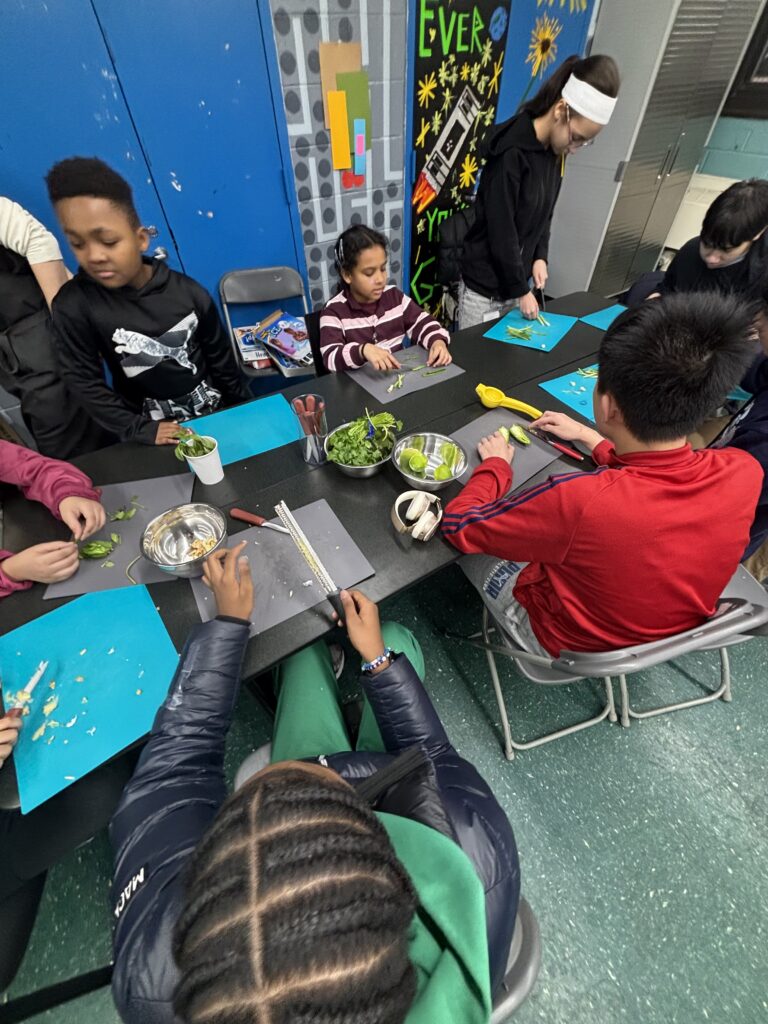
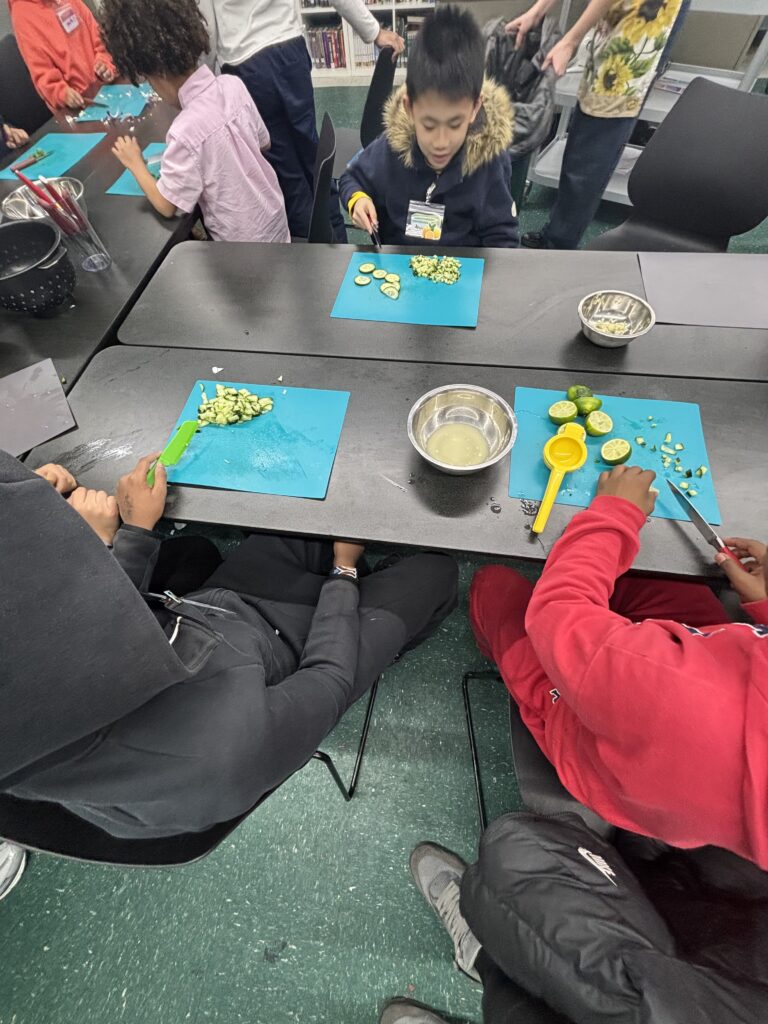

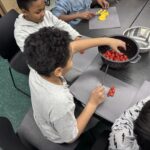
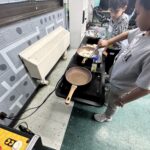

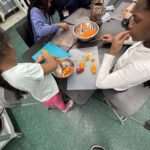
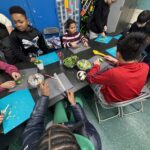

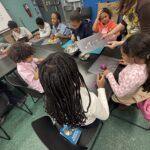

While regular TSC classes usually focus on individual age groups, this partnership looks a little different. Each session is split into two groups, with younger and older students making versions of the same recipes at different levels. While the recipes may be shared, the work looks different depending on the student. For some, it’s learning how to safely hold a knife. For others, it’s figuring out how to adjust a flavor or explain what they’re tasting. Across every class, the goal is the same: build real skills, and give students the confidence to use them.
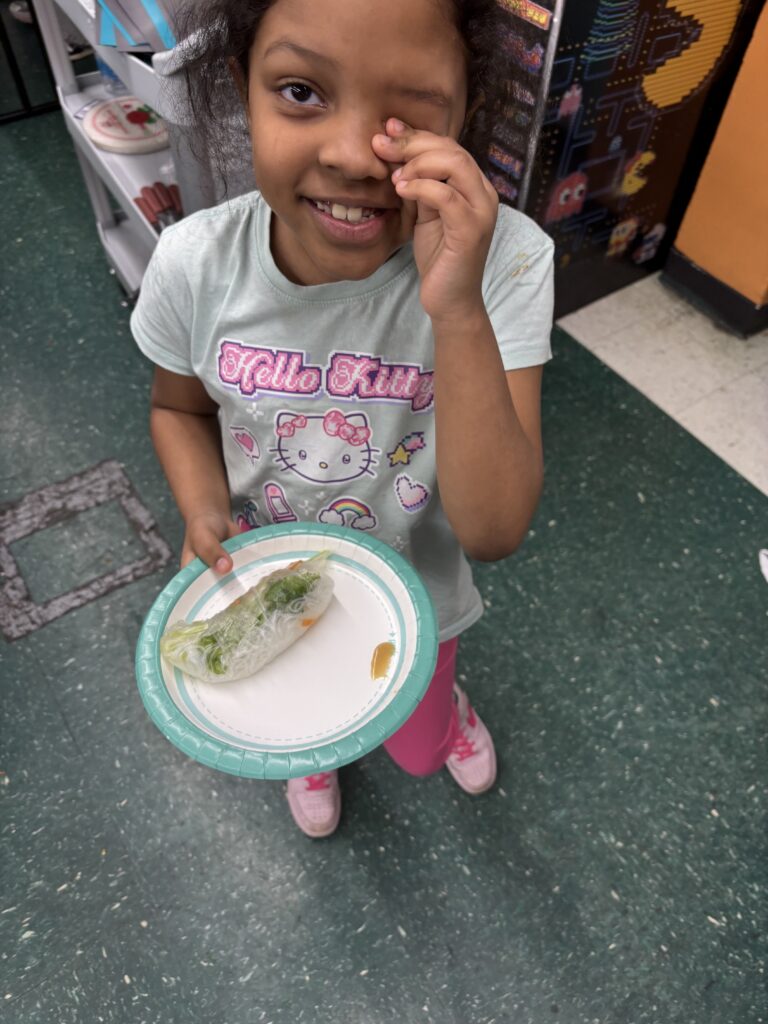
So far, students have cooked their way through a globally inspired lineup including pita pizzas, guacamole & pico de gallo, cowboy caviar, and Summer rolls—from fruit-filled versions with honey lime yogurt dip to traditional Vietnamese gỏi cuốn.
Practice Makes It Possible
Each recipe introduces something new—but just as importantly, it gives students the chance to repeat, revisit, and improve. When Eliana introduced ginger in week three, many students hesitated. They weren’t sure about the smell or the taste, and some held back from using it at all. A week later, they approached it differently. Students who had been unsure the first time began adding it more confidently—some even choosing to include extra in their summer rolls or dipping sauces. The ingredient hadn’t changed, but their confidence had. That shift—trying something once, and then coming back to it with more confidence—is a core part of how students build comfort with new foods.
Small Skills, Big Impact
In another class, a kindergartener worked on cutting tomatoes using the tunnel method. He often finds it difficult to stay still and is still developing motor skills. But this time, the technique clicked. He completed the task on his own and lit up with pride. These are the moments we’re working toward. Not perfection—but progress. A student mastering a single step, and recognizing that they can do it.
Learning to Speak Up About Food
With older students, the work begins to shift from doing to explaining. While making a tahini dipping sauce, Eliana asked the group why they were adding honey. One student answered: “to make the garlic flavor less strong.” That kind of response shows something deeper than following a recipe. It shows that students are starting to identify flavors, understand how ingredients interact, and make decisions about how they want their food to taste. Just as importantly, they’re learning how to talk about it—what they like, what they don’t, and what they would change.
Across every class at Rutgers, students are doing the same core work: trying new foods, building technique, and practicing how to express their preferences. It’s hands-on, it takes time, and it doesn’t happen all at once. But week by week, you can see it: students becoming more willing to try, more capable in the kitchen, and more confident in their own voice.