




What makes a meal healthy? Is it the ingredients, how it’s prepared, or how often we eat it? Does healthy eating mean cooking everything from scratch, avoiding processed foods, or following a particular diet?
At The Sylvia Center, we believe the answer is more complex—and more personal—than any single set of rules.
Our approach to nutrition centers on variety, balance, and the practical skills that help young people and families make informed choices about food. We prioritize vegetables, fruits, whole grains, and plant-based proteins, while recognizing that healthy eating looks different across cultures, households, budgets, and individual needs.
Above all, we believe that learning about food—and how to nourish ourselves—should build curiosity and confidence, not guilt or anxiety.
What Does Healthy Eating Mean for Kids?
Children need a variety of nutrient-dense foods to support their growth, development, and well-being. Rather than focusing on individual ingredients as “good” or “bad,” we teach students to think about the balance and variety of foods they eat over time.
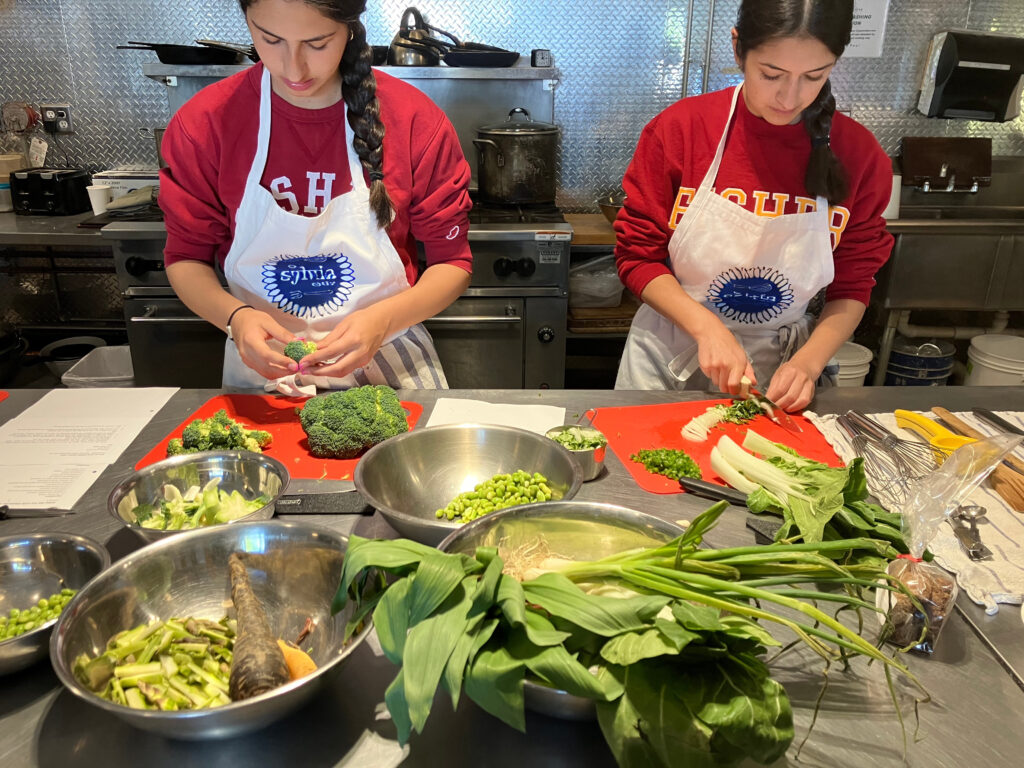
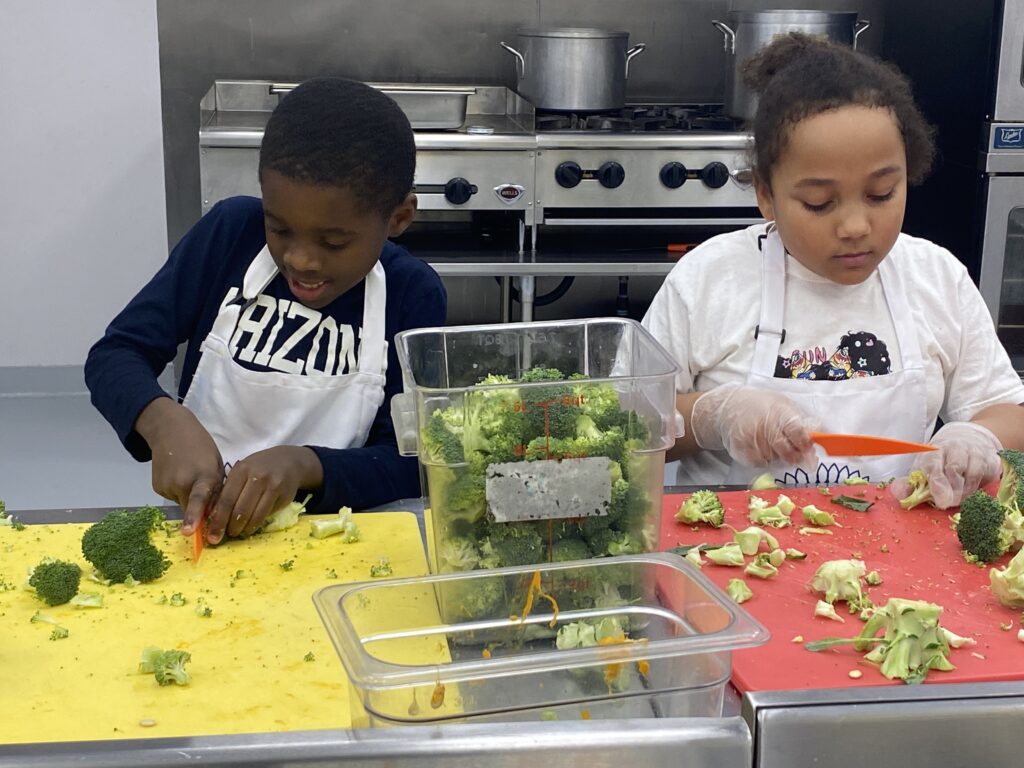
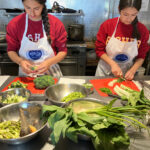
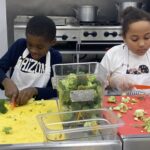
Our recipes introduce vegetables, fruits, whole grains, and plant-based proteins through hands-on cooking. Students explore how different ingredients nourish their bodies, discover new flavors, and learn to prepare meals they can enjoy and recreate at home.
We also recognize that children develop their relationships with food at different rates. Research suggests that repeated exposure to unfamiliar vegetables can increase children’s willingness to try them, their enjoyment of them, and, in some cases, how much they eat. That’s why our lessons emphasize exploration, encouragement, and choice rather than pressure. A child might start by touching or smelling an unfamiliar ingredient long before feeling ready to taste it.
Healthy eating isn’t about getting every meal right. It’s about learning how to nourish ourselves and developing knowledge, skills, and habits that can grow with us.
Why Does The Sylvia Center Focus on Plant-Based Foods?
Our curriculum is plant-forward because vegetables, fruits, legumes, and whole grains provide essential nutrients, and many children in the United States aren’t eating enough of them.
That doesn’t mean everyone needs to be vegetarian. Meat, fish, eggs, and dairy can all contribute valuable nutrients to a healthy diet. Our goal is to help students discover more ways to enjoy and prepare plant-based foods, expanding the possibilities available to them.
A vegetable-forward cooking class also creates opportunities to discover foods that might otherwise be overlooked. Lentils can become a hearty stew, chickpeas can anchor a satisfying meal, and cabbage can be transformed through roasting, sautéing, or seasoning.
These ingredients can also be affordable, adaptable, and accessible in ways that make them particularly useful for home cooking.
Our goal isn’t to remove foods from students’ diets. It’s to expand the possibilities they see on their plates.
Are Processed Foods Unhealthy?
Not necessarily. Food processing exists on a spectrum, and many processed foods make nutritious eating easier, safer, more affordable, or more convenient.
Frozen vegetables, canned beans, yogurt, and whole-grain bread are all examples of foods that have been processed. They can be practical, nourishing ingredients, particularly for families balancing limited time and budgets.
Some ultra-processed foods, meanwhile, can contain substantial amounts of added sugar or sodium. We encourage students to understand these differences and consider how foods fit into their overall eating patterns. But we don’t teach children to fear packaged foods or label individual choices as failures.
Instead, we explore ingredients, food labels, cooking methods, and the ways processing can affect flavor, texture, convenience, and nutritional value. The aim is to give students useful information, not another set of restrictions.
Is Cooking at Home Healthier Than Eating Out?
Research has found links between more frequent home cooking and healthier overall dietary patterns, including greater consumption of fruits and vegetables. Cooking at home can also offer more control over ingredients, portions, and preparation methods, while creating opportunities to experiment, build skills, and share meals.
But home cooking isn’t automatically healthier, and preparing every meal from scratch isn’t realistic for many families. Work schedules, caregiving responsibilities, access to a kitchen and necessary equipment, food costs, and grocery availability all influence what people can prepare. Takeout, convenience foods, and prepared meals can be necessary tools of everyday life.
At The Sylvia Center, we teach cooking as a practical skill that gives families more options.
Students learn to make adaptable recipes using familiar ingredients, affordable staples, and seasonal produce where available. Our family cooking programs also provide ingredients and guided instruction, helping participants put those skills into practice at home.
Even knowing how to prepare one additional meal can make a difference.
What About Food Access and Affordability?
Healthy eating doesn’t happen in a vacuum. The ability to buy, store, and prepare nutritious food depends on much more than personal preference. Families are navigating rising grocery costs, unequal access to fresh produce, transportation barriers, and limited time and resources.
In The Sylvia Center’s FY25 participant data, 79% reported difficulty finding affordable fruits and vegetables in their neighborhoods. That reality shapes how we teach.
We emphasize ingredients that can be used in multiple dishes, affordable sources of protein such as beans and lentils, and recipes that can be adapted to what families have available. Seasonal produce can offer opportunities to explore fresh ingredients, but frozen and canned alternatives can be equally valuable.
Food education cannot solve systemic problems of affordability and access on its own. But finding, choosing, and preparing nourishing food within real-world constraints takes knowledge, flexibility, and practice. We aim to help young people develop those skills, so they have more confidence navigating the choices available to them.
How Do We Help Children Build Healthy Eating Habits?
We start with curiosity, creating a supportive environment where trying something unfamiliar can feel like an adventure.
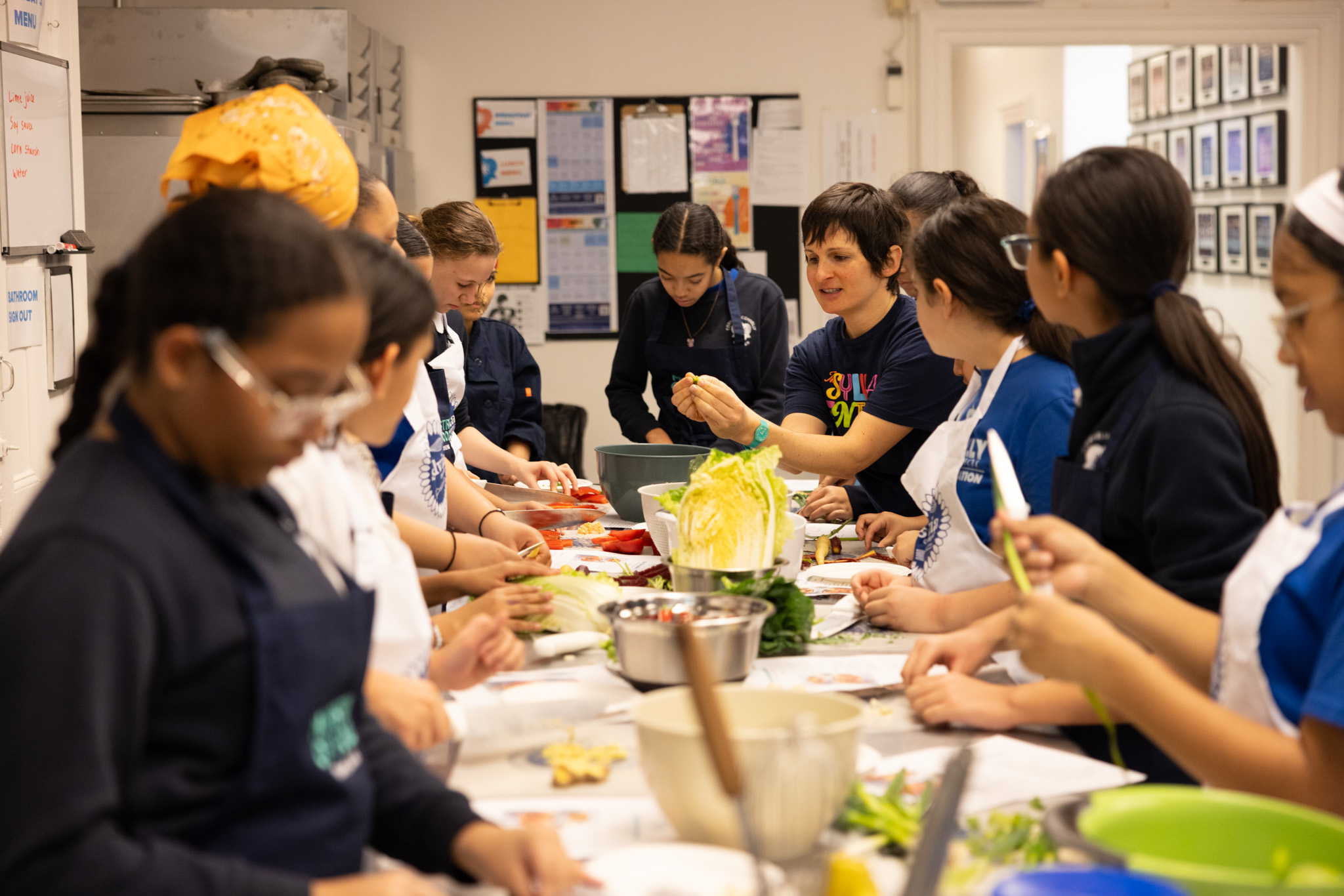
In our classrooms, students chop, taste, season, compare, and cook together. They discover new ingredients alongside their peers, without pressure to like or eat everything they encounter. A child who isn’t ready to taste a vegetable might still enjoy washing it, cutting it, smelling it, or helping prepare a dish.
Our recipes draw on diverse heritage diets, celebrating the food traditions and knowledge students bring from home while introducing them to unfamiliar ingredients and techniques. Rather than presenting one way of eating as the healthiest, we explore the many ways different cultures create nourishing meals.
And when the cooking is done, sharing what they’ve made gives students another opportunity to connect: to talk about flavors, exchange opinions, celebrate their work, and enjoy food together.
Those experiences matter: in our FY25 participant feedback, 95% of students reported trying a food that was new to them.
We believe healthy eating begins with access to food, knowledge, and opportunity. By making cooking approachable, culturally meaningful, and enjoyable, we help young people build the confidence to explore food and make informed choices throughout their lives.
Reviewed by The Sylvia Center’s
Education Programs Director Beth Bainbridge, MPH, RDN